The Situation Before the Battle of Şebeş
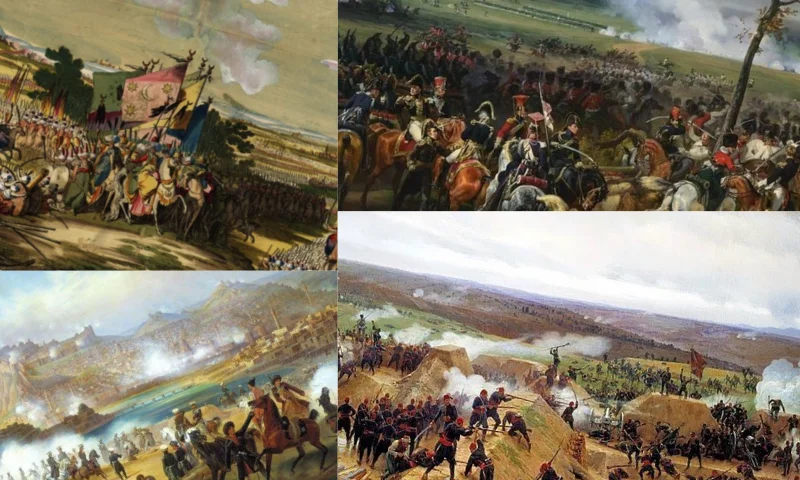
The Ottoman Empire has fought many wars throughout its history and has won the vast majority of them. There were also some battles that ended in a draw, and some in which the Ottomans were defeated. The Battle of Şebeş is one of the most interesting battles in Ottoman and world history. This is the only battle the Ottomans won without firing a single shot or drawing a sword. The Battle of Şebeş took place between the Ottoman Empire and the Duchy of Austria, a dependency of the Holy Roman Empire. The primary reason for the Battle of Şebeş was the tensions between the Ottomans and the Russians. The Ottomans had been at war with the Russians since the end of the 1500s. The Russians' policy of seeking access to warm seas and the Ottoman desire to expand their borders repeatedly brought the Russians and the Turks into conflict throughout history. In 1788, during the reign of Sultan Abdülhamid I, the Turks and Russians clashed over Crimea and several other issues. These tensions led to a battle between the Turks and Russians on the Russian border.
How Did the Battle of Şebeş Occur?
The Russians managed to bring the Austrians to their side in this war. Archduke Joseph II of Austria assembled an army of approximately 100,000 men. The most notable feature of this army was the ethnic diversity of its military units. As Austria was part of the Holy Roman Empire, the soldiers comprised Austrian and German contingents, along with some European units. This situation was a significant disadvantage for Joseph II because everyone in the army spoke a different language, leading to a lack of communication within the ranks. No one could understand what anyone else was saying. The absence of a common language on the front lines prevented the soldiers from acting in concert. The Ottoman Sultan Abdülhamid I assigned Grand Vizier Koca Yusuf Pasha to the Austrian front. The exact number of soldiers in Yusuf Pasha's army is not precisely known. However, the Austrian army consisted of between 80,000 and 100,000 soldiers. It is known that the Ottoman army did not mobilize such a large force. Furthermore, the Austrians arrived on the battlefield with 500 cannons. Şebeş is located within the present-day borders of Romania. The Battle of Şebeş was not the only engagement between the Ottomans and the Austrians in 1788. Prior to this battle, Joseph II's army of 200,000 men had clashed with the Ottoman army, and the Austrians were forced to retreat. The Battle of Şebeş is recounted differently in Turkish and German sources. According to German sources, the Austrians encamped at Şebeş sent out a reconnaissance unit to observe the Turks. This unit purchased alcohol from an approaching caravan and began to drink. The soldiers, having consumed too much alcohol, forgot that their headquarters expected a report from them. Hours later, receiving no word from the reconnaissance unit, the army sent an infantry regiment to check on them. Upon seeing the unit drunk and drinking, the infantrymen wanted to join them. However, the unit did not permit this, leading to an argument within the army. This argument eventually escalated into a brawl. Some soldiers, firing at each other, shouted, "The Turks are coming!" to frighten the others. This caused the soldiers to start running towards their own camp. The soldiers at headquarters, mistaking the fleeing men for Turks, began firing at them. Meanwhile, the drunken soldiers also started attacking their own army. The Austrian army had effectively destroyed itself. The soldiers then became frightened and began to flee. The camp was suddenly deserted. It is known that the Austrian army lost over 10,000 soldiers during this incident. Days after these events, the Ottoman army arrived in the area and found that the enemy soldiers had annihilated themselves. However, the account in Turkish sources differs slightly. According to these sources, the Ottoman army encountered the enemy soldiers at Şebeş and achieved a great victory against them. It is written that such an event occurred only among small units. The Ottomans, who emerged victorious from the Battle of Şebeş, suffered a defeat on the front they faced the Russians.