What Should We Pay Attention to When Raising a Baby?
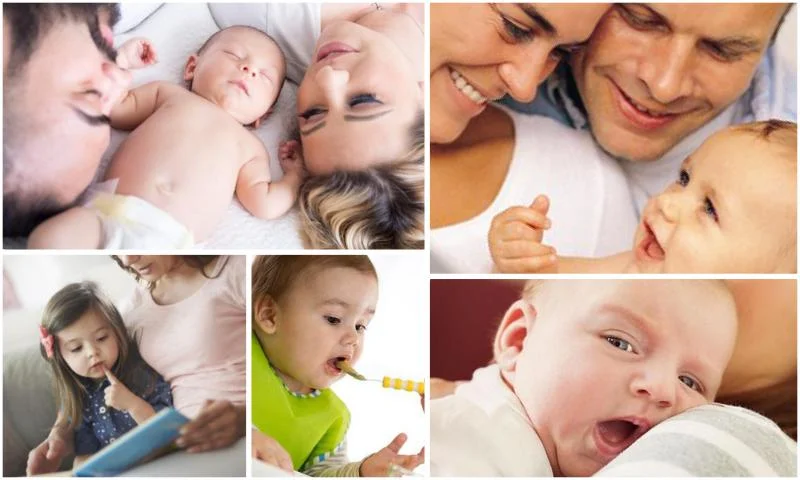
Children are Divergent
The sense that develops even in the womb is the sense of hearing. It starts from the 26th week in the womb. The sense they possess immediately after birth is the sense of taste. They have a structure that can distinguish between sour and sweet. They even crush dates and rub their juice on the baby's lips after birth so that the child gets used to breast milk. It really works. After hearing and taste, comes sight. Children do not see immediately after birth; even if they see, they see blurry. This has a process. Vision matures by 8-9 years of age and they fully possess a human eye.
Perceptual Abilities
Children are divergent. They may sometimes not see what is right in front of their noses. They may not see what is close to them. This is due to the biological limitations of children. It is a condition that can improve over time. It is important not to humiliate the child by saying, "You see what you want to see and you don't see what you don't want to see," because this is not something they can control. Children start seeing in 3D from the sixth month. They start distinguishing colors from the fourth month. The development of very complex organs is spread over time. The eye is one of these. The sense of touch develops last. They are not very sensitive to touch at first. That is, they cannot fully distinguish hot and cold when touched. This is because the neural infrastructure has not developed. Then there are perceptual abilities. Perception is the interpretation of senses. This also develops over time. When a child hears a musical sound, they may not perceive it as music, but it lays the groundwork for it. A stimulus is necessary for us to perceive. For this, the baby or child must receive various stimuli. We mentioned that the richness of stimuli is very important. Even if the child doesn't remember, everything they see or hear leaves a mark on them. When the time comes, they will piece the parts together one by one. Consider a child hearing a sound. They look towards the direction of the sound, which also develops their motor skills. They saw something and need to crawl to get it, which develops their motor skills. As this develops, perceptual data becomes clearer. They understand it better. There is a direct, close, and serious relationship between the motor skills and physical abilities of infancy and the child's mental development. So, if you want to help a baby's mental development, you also need to pay attention to their physical and motor skills. At no other stage are these three so close to each other. At this stage, every physical activity benefits mental activity. Even a baby following something with their eyes develops mental activity.