
What is Marmara Marble?
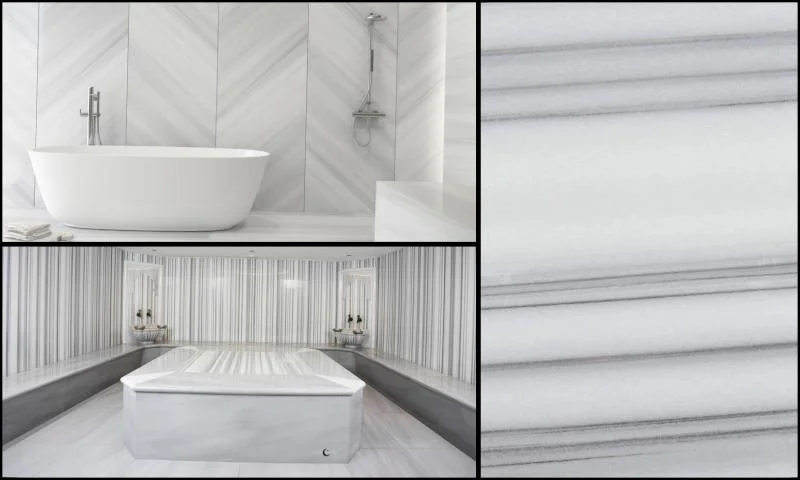
Properties of Marmara Marble
It is generally known as grey or, as known in the market, Marmara marble, and it is a selection of striped Marmara marbles that are predominantly grey. Also, the main character of silver panda marble is determined by the stripes spread irregularly over grey backgrounds. Using grey-backed marble models in personal and special projects adds magnificent beauty and a fresh and pleasant look to all areas. These products are frequently preferred in all desired applications, both indoors and outdoors. Additionally, due to their high sulfur content, Marmara marbles are generally used and preferred in areas requiring hygiene, such as hammams.
What are the Usage Areas of Marmara Marbles?
Marmara marble products are the type of marble that reflects surface brightness to the areas where they are used with their generally milky white colors, reflecting light diffusely and directionally in the most ways. At the same time, due to the semi-transparent surface properties of Marmara marbles, light scatters from the layers under the surfaces and returns to the surface with complex light interactions. Accordingly, in such applications, it always reflects unique beauties to the areas and adds freshness. It is used in all desired outdoor and indoor spaces. These products are frequently used today in indoor and outdoor spaces, kitchen countertops, sidewalks, streets or pedestrian paths, floor coverings, rain gutters, and accessible stones. Marmara marble is also frequently used in exterior facade coverings, paving and sidewalk stones, stair and step coverings, skirting boards and risers, and floor and ground coverings. The products are among the most used marble varieties as striped Marmara in hammams and wet floors of luxury projects. The selection processes that begin in nature, compared to the demanded products, make diagonal Marmara products indispensable for architects, and they are always one of the leading designs for building materials. At the same time, the prices of these products are generally at different levels depending on the colors of the products, their quality, and the areas and spaces where they will be used. However, the biggest price advantage of these products, which are generally medium-priced, is that they are domestically produced.